If you have one you can pull out a pot big enough to hold the carcass. Don’t have one? get shopping! I’m sure many of you will be thrilled to have another excuse…some of us, though, just want to get it over with. Make a list. Do you have a spoon long enough to stir but that still fits in your dishwasher? get the ruler. Do you have a sieve? And a big bowl to set it in? Do you want metal, ceramic or enamel? Think about wight, comfort and what fits in your dishwasher. When you’re shopping for anything you plan on using try it on for size. That’s right, pick it up, think about how heavy it is and how heavy it’ll be when it’s full. How comfortable are the handles? Are they easy to grip? If they aren’t pleasant to work with you won’t want to use them. You may have to compromise when choosing based on price and comfort, but you’ll probably be surprised at how nice some of the moderately priced options are. I like enamel and stainless steel, but I’ve had mine since high school. I figured that I’d eventually move out so I saved grocery stamps for their special offers on dinnerware and cookware. My first set of stemware was from a bank when I opened my first checking account, but I digress…
You might have some luck at second-hand or thrift stores. I’ve found amazing things at Goodwill, Salvation Army and other shops. Grocery stores often have pots in their aisles that display kitchen equipment or canning supplies. Try the big box stores, too…you know, the ones we love to hate. If all else fails, go to the mall and hit one of their anchor store’s kitchen sections or a gourmet shop…unless you are of the socio-economic level that enabled you to choose that option first. If you try this recipe, decide never to do this again and donate the pot to your local thrift store the rest of us thank you…and don’t forget to keep the receipt for your taxes.
You’ll most likely be doing this the day or two after you make a roast, since you won’t want to be up all night making broth for later. Just carve off all the meat that’s still left on the bones and divvy it up into containers for future use. Don’t forget to put the carcass in the fridge so (1) it doesn’t go bad and (2) the critters don’t get it.
Now that you have the pot, saute a chopped onion in the bottom with maybe some garlic. When they’re as done as you want add some wine (white won’t add colour but red is OK) to de-glaze any fond from the bottom of the pan. De-glaze means making any brown stuff (fond) sticking to the bottom of the pan come off and mix with the liquid. This is like magic and the flavour is incomparable. Don’t loose this wonderful stuff!
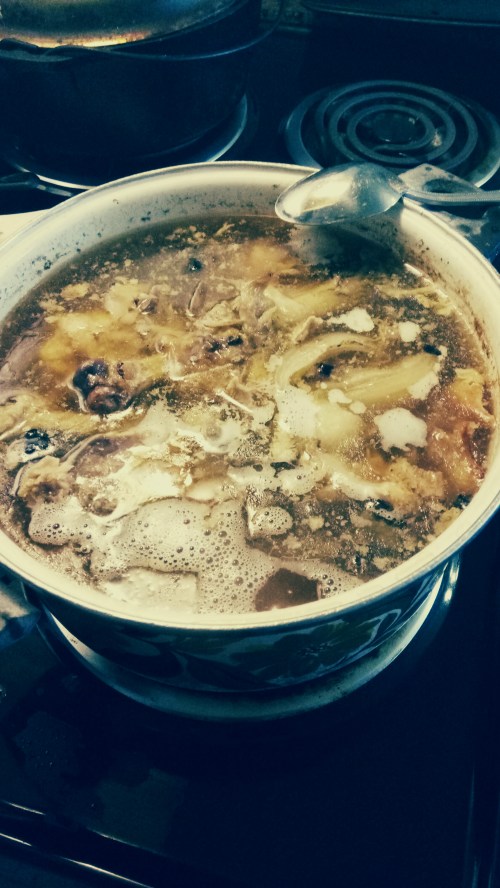 As soon as this is done add some water, put the bones in the pot and cover with water. Or just skip the sauteing and start here. Add celery and carrots for flavour if you like. Simmer for a few hours. How do you know when it’s done? When the cartilage dissolves.
When it’s done, after a few hours or when you get tired of waiting, put the colander in a bowl and strain the broth.
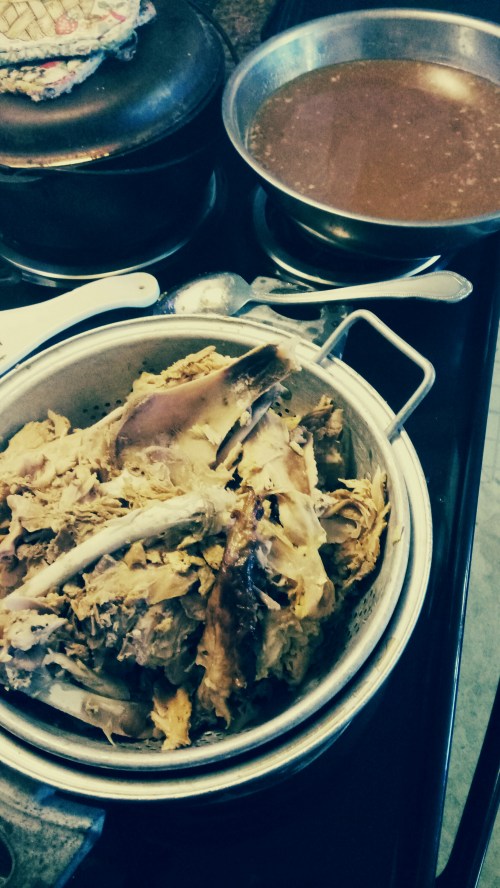 Move the colander from the bowl to a plate or back over the pot and let it cool enough to handle. Once it’s cool you can pull all the meat off to use as special treats for the critters. Make sure all the bones are out! If you’re an artist you might want to clean up some of the more interesting bones to use in art or as tools. Otherwise, toss them.
 Save the broth in containers in the freezer until you’re ready to make stuffings, stews or soups.
 Brielle's Avalon
Leave a comment