Shut Box probably originated around the islands in the English Channel somewhere between the 15th to 18th century, so it might be fun to incorporate into geography and history classes. When my kids were little I used this game to teach them how to take turns, count the pips on dice, basic strategy, number recognition and later Roman numerals and Chinese numbers. They used it in school for show and tell and math class. I’ve started games at parties in a corner with people coming and going all evening. It’s easy to learn, takes a little bit of skill to win and is just unpredictable enough to keep you on your toes and be fun.
Materials:
Pencil, Paper, 2 Six-sided dice, 9 markers (pennies or stones will do).
The board is a square made of 9 squares with the numbers 1-9 in them.
Players: any number
Rules:
The first player throws the dice and places a marker on either the sum of the two dice or each of the numbers thrown. For example, throw 2/3 and you can either put one marker on 5 or one marker on 2 and one marker on 3. The player continues to throw the dice until he can’t cover any numbers with the numbers thrown. So, if the only numbers thrown are 4, 7 and 8 and you throw a pair of 3’s, then you can’t cover anything, your turn is over and you add up the numbers showing, clear the board and pass the dice to the next player. Play continues in a round until everyone had thrown and added their leftover numbers. The player with the lowest number wins and a new round may start. The winner also wins the difference between their score and the loser’s scores, if you choose to enjoy the potential redistribution of wealth aspect of the game.

Shut Box set found in an antique shop
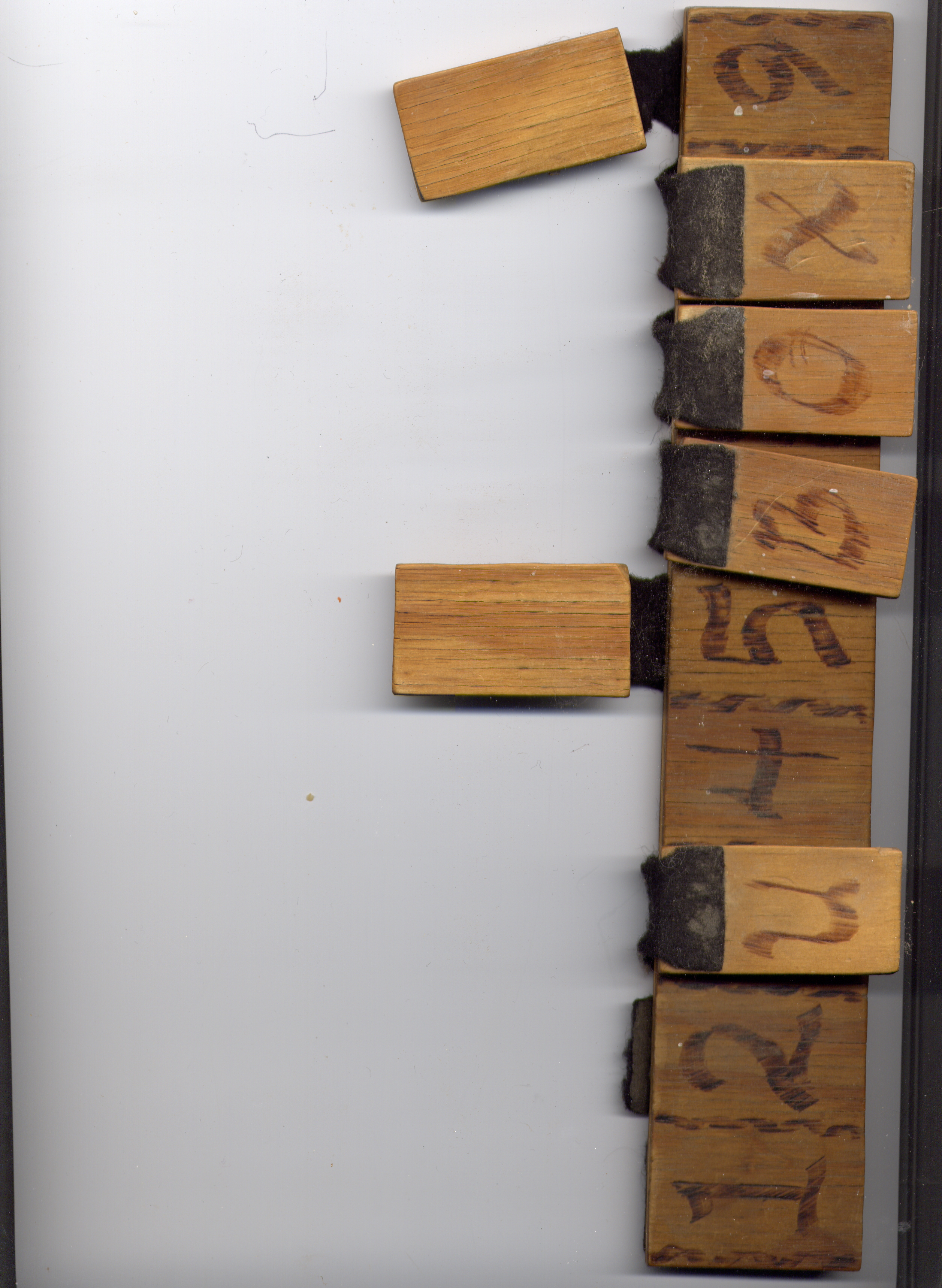
A simple flip-style board

Simple Shut Box board
 Brielle's Avalon
Leave a comment