It has recently occurred to me that one may, at times, need to cook using only one hand. Holding a baby, arm in a cast or sling…whatever, you get the idea. It’s not easy. A food processor makes it easier. See my tepenade recipe. And eggs. I’m recently going crazy for eggs. I learned to crack them one-handed years ago just so I could show off so lately they are my fall-back cooking after making tepenade, dry toast and PB&J. I thought sardines would be easy but the can’s a b…nuisance to open! The leftovers in the freezer sparked up dinners once my appetite came back and store-bought chicken pot pies were the guilty easy-out. I picked up some cold cuts and sliced cheese and realized that mayonnaise and mustard are much easier to spread than peanut-butter. NOW I figure that out! Silly me! I already have a Quiche recipe up, and herbed noodles and beans. Now I need to post oatmeal and rice. There’s got to be more creative stuff…opening cans and packages is NOT easy, so once I’ve finished the cereal I’ll wait for someone else to open the next box. On the other hand, fresh fruit and veggies are easy to just wash and eat if no serious cutting or peeling is involved. Bananas peel easy if you squeeze the end opposite the stem. Really! Try it! If/when I come up with more stuff I’ll add more recipes and when I have more movement in my right arm I’ll take some pictures to post into the recipes. Happy cooking and healthy eating!
Cooking Single-Handed
Boiled Eggs
One would think this is easy. Anyone can do it. So why do we have so much trouble? It’s not rocket science. First off, start with room temperature eggs, so leave them out overnight or for a few hours. Don’t worry, they won’t spoil. If you didn’t plan ahead then put the eggs in a bowl and run hot tapwater over them for a few minutes to take the chill off. How put enough water in a pan to cover the eggs by about an inch. If you have to put the eggs in and take them out to make sure you have enough that’s OK. Bring the water to a boil. Poke a hole in the middle of the large end of the egg (that’s where the air pocket is).This will let off pressure so it won’t crack. Simmer for 3-4 minutes for a soft-boiled egg with a nice, runny yolk that you can dip soldiers in.
What are soldiers? It’s buttered toast that’s been cut into strips so they can be dipped in the egg. How do you get into the egg? You set it in an egg cup. Don’t have one? Improvise with wadded up aluminum foil until you can find one in a gourmet shop or online. There is some debate over whether you should open the large end or the small end of the egg. While this may seem trivial it has been known to cause heated debate and strife. To avoid trouble, if those you are dining with are from Blefuscu, honor their big-endian tendencies by serving the soft-boiled eggs big ends up and open them from the big ends. If you are dining with Lilliputians serve the eggs small end up and open the small end. If you must dine with both sorts of people, avoid serving soft-boiled eggs.
So what about hard-boiled eggs? Start with eggs that are about 5 days old. Fresh eggs are harder to peel. Put the eggs in a pan 1 layer deep and cover with an inch or so of water. Start with the eggs in tap water and bring them to a boil so they don’t break from heating. You can poke a hole in the big end to let pressure off or even add a spoonful of vinegar to keep the white from leaking out if they do crack. Some people say that adding salt to the water will make the eggs easier to peel. Once the eggs have been boiling for about a minute turn off the heat, cover the pan and let them sit in the water about 15 minutes. Take one out, cool in cold water until you can peel it and cut it in half to make sure they’re done. If not bring to a boil again. Cool in ice water or cool water, peel and eat within 5 days or so. Just salt them and eat them plain or slice and use as garnish on salads or other dishes, cut into cubes or grate and use in egg salad or just cut in half and make deviled eggs.
Posted in Ambrosia...or It's 5:00 & What's in the Fridge?, From the ground up | Tags: basic cooking techniques, boiling eggs, cooking, Do It Yourself, eggs, food, Holiday cooking, holiday recipes, one-handed cooking, post a day 2011, Self Sufficiancy, side dishes, single handed cooking, Survival, the simple life
Borage
Borage (Borago officinalis) has been real unpredictable for me. In Scottsdale it grew 6 inches tall, made a few flowers and died. In Seattle it grew 3 feet tall, almost as wide and took over the garden as it attracted squadrons of bees. In Florida it grew a manageable 2 toot tall, made a respectable display of flowers that attracted some bees and I even saw a humming-bird buzzing it once.It’s an annual that’s easy to grow and makes a good companion plant, both to confuse pests and attract bees. It looks like I’ll have to grow some more, since I can’t find my pictures of borage in the garden!
The leaves and flowers taste like cucumber and are used in salads, drinks, teas, sandwiches, cheeses and deserts. The young leaves are more tender than the old leaves, which can be cooked and eaten like spinach. Borage has to be used fresh because the leaves and flowers lose their flavour when dried, but you can freeze them in ice cubes for use in drinks. The flowers are pretty in potpourri when they’ve been dried in silica gel but they don’t add to the scent. Both the flowers and leaves can be candied and used to decorate cakes, pastries, candies and confections.
One way to candy them is sugaring. You’ll need a plate or tray lined with waxed paper, toothpicks, tweezers, a soft paintbrush, bowls for egg-whites and sugar, flowers/petals/leaves, egg-whites and sugar (preferably superfine if you can find it). If you can’t find superfine sugar just zap a bit of regular white sugar in the blender for a few seconds to make the crystals smaller. Any edible flower can be used, just be sure it’s edible (rose, marigold, violet…) and that it hasn’t been treated with pesticides, organically grown. If it’s large like a rose it’s usually better to do the petals individually and use them individually.
Separate the egg-yolk from the egg-white. The yolk can be used to make hollandaise of mayonnaise. Beat the egg-white til smooth and homogenous but not very frothy. Holding the flower or petal with fingernails or tweezers, paint it with egg-white. Set it in a bowl with a layer or a small mound of sugar in it and gently sprinkle sugar over it from the other bowl. A spoon can help to be more delicate while you sprinkle. Toothpicks are handy to separate the petals and other parts while sprinkling. Shake off excess sugar and set on clean waxed paper to dry.
Real, Old-Fashioned Fudge, A-la Aunt Zora
Every year my great-aunt would make a batch of fudge for my Dad’s birthday. It was the best anyone ever tasted and when she passed away we were sure we’d find the recipe in one of her books, but alas it was not to be. She took the secret with her. There are lots of fudge recipes, including no-cook versions but I haven’t found any like this. Mom taught me using the recipe from her old Better Homes and Gardens New Cook Book from the late ’50s or early ’60s. Making fudge is a right of passage for girls, and one of the preferred activities at sleep-overs. I’m now on a quest for the perfect Aunt Zora’s Fudge and have been for several years now…and several pounds later. I’m still working on it. Perfection can not be rushed, but the journey is quite pleasant with chocolate as a companion!
Ingredients: 2c sugar, 1/3c half and half, 2 squares baking chocolate, 2 Tbsp butter, 1 tsp vanilla.
So. Butter the bottom and sides of a 2 quart saucepan. Add 2 c sugar, 1/3 c half and half and 2 squares baking chocolate. Stir constantly over medium-high heat until the sugar is dissolved and comes to a boil. Stop stirring while it boils until it comes to the soft-ball stage. Either use a candy thermometer to know when it gets to between 235-240 Fahrenheit or have a cup of cold water beside the stove and drop a bit of fudge syrup in about every 5-10 minutes. When it forms a soft, flexible ball it is done. While you’re waiting fill the sink with enough water to cool the bottom of the pan, about 1/2 way up. You don’t want to get water in it or it could seize up and even get grainy! Add 2 Tbsp butter (OK, margarine if you must) and 1 tsp vanilla. Butter a plate while you wait. When the butter is melted and it’s cool enough to handle grab a towel for your lap and a spoon and start beating the fudge. This could take a while, 5-15 minutes. When it starts to lose it’s gloss turn it out onto the buttered plate, spreading evenly if it doesn’t flow easily. As soon as it sets cut with a knife and store in the fridge or freezer a tin lined with waxed paper and waxed paper between layers.
I prefer my fudge plain, but if you want to add nuts, mix them in just before you pour it onto the plate or take almonds/walnut/pecan/peanut halves and press them onto the top of each piece before they compleatly set-up. Maybe a bit of marshmallow cream, caramel, broken peppermint candies can be stirred in right before spreading on the plate or a dab of jam in a thumbprint-hollow would be nice, but is really gilding-the-Lilly.
Mom used to make Nana’s Marvelous Chocolate Cake for our birthdays and sometimes, if the fudge cooperated, would ice it with fudge. Nana was Aunt Zora’s sister…good cooks run in the family. Getting it to spread over the cake is tricky and an art in itself. Learn to make butter-cream frosting ‘just in case’ and cut out pieces of fudge to decorate it with if it doesn’t coöperate. If you want to practice you can make a couple batches of brownies (sturdier than cake) and get used to it. You can also experiment with layering fudge on top of the brownies with caramel or other things layered on…
If disaster happens and it doesn’t set up pour it into a clean jar and use it as fudge sauce on ice cream and other deserts. This can happen up to 50% of the time, so if you’re cooking for a specific purpose leave enough time to make another batch and be the genius who can manage the best fudge as well as the best fudge sauce ever! Sometimes sauce can be re-boiled and brought up to temperature to set up. If you over-cook fudge it can set too fast and hard, get grainy and generally be not too good, but I’ve still used it dissolved in a little hot milk as a quick, half-decent chocolate sauce. Over ice cream it’s great…it is still chocolate, after all! Apparently if you add a tsp of corn syrup this can help prevent grains of sugar from forming in the fudge. You also need to make sure that the sugar is compleatly dissolved and there are no granules on the sides before it starts boiling. If you do this it doesn’t seem to matter whether the corn syrup is added or not. On the other hand, if there are grains of sugar on the side or undissolved before it boils, corn sugar doesn’t seem to help, or maybe only a little.
The secret is that fudge-making is a true bit of witchcraft, a potion to be handed down from wise-woman to student, the skill to be cultivated and developed over time, held as a close secret if you can capture the knack. It’s best done with friends or family around, almost ritually but as a solitary practice that can also connect one with Godhead! So practice often and you may want to start a work-out regimen of some sort if you aren’t already in the habit.
Bay
Bay (Laurus nobilis), also called Sweet Bay, Grecian Laurel, or just Laurel and Daphne is the Greek name for the tree. I don’t have a Bay tree. I tried growing one once but it didn’t survive the move to Arizona from Florida. As soon as I can afford to get another from Nichols Garden Nursery I’ll try harder.You can grow it in a flowerpot, a barrel or in the ground depending on where you live. You can also let it grow wild or clip it into formal shapes. If allowed to just grow it can eventually reach 30 to 50 feet tall, but if clipped you can keep it manageable, under 8 feet or even bonsai it. While it’s young keep it in partial shade, maybe the east or west side of the house. The north side will probably get too much shade and the south side sun could burn it. If it’s in a pot you can move it around to the best spot according to the season and weather and bring it inside when it gets frosty. Once established it doesn’t need much care, especially if planted in the ground.The tree is disease and pest resistant and may help discourage pests from bothering nearby plants.
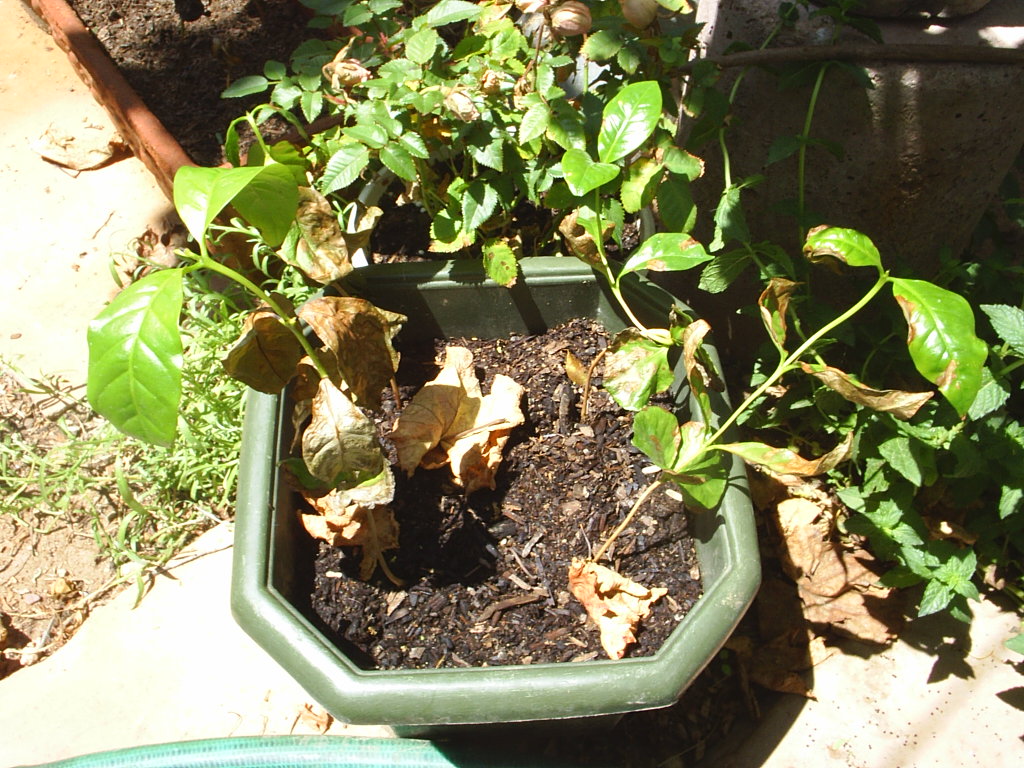
Baby Bay
The leaves can be harvested anytime and dried for later use or used fresh. The young ones have the most flavour. To keep the leaves from curling when you dry them put them between 2 spatter screens and clamp them together. When they’re dry store them in jars.
Use it in roasts, soups, stews, sauces and marinades. Bay leaves are usually removed before serving. A few leaves in the dog or cat’s bed can repel fleas and in stored clothes they can discourage moths. A leaf in the flour, rice or pasta canister keeps weevils away. You can make a pale green dye from the leaves.
Apollo was smitten with the nymph Daphne, so to avoid him she asked her father, the river God Peneus, to change her into a tree and thus the Laurel came into being. Wreaths were given as prizes at the Pythian Games in honour of Apollo and have come to symbolize fame, prosperity and achievement through the ages to modern times. Baccalaureate and Poet laureate are derived from the name of this tree as is the expression ‘resting on one’s laurels’. It was believed that standing under the tree would shield you from lightning, the plague and witches.
Cheese Crisps
Also called Quesadillas. We grew up eating these with Mexican food dinners, whether that was tacos, enchiladas, tostadas or whatever. This is the first of my one-handed gourmet things. While I’m temporarily a leftie I figured others might appreciate some ideas. As long as you can get into the flour or whole-wheat tortilla package you should be OK on this.
 Take a frying pan big enough to hold the tortilla. Melt some fat in it. Your choice. Mom used Crisco ™, I use it too, but the butter flavoured kind. Some people also use lard, butter or bacon fat. Bacon fat is really yummy! Anyway, fry the tortilla in the fat in the pan over medium heat. Both sides. Turn it often and deflate the bubbles that will happen. Use enough fat and press it down so you get as even a browning as possible, since the point is to have a cheese crisp, not a cheese wimpy or a cheese burnt!
 When done take it out and drain on a paper towel. At this point you can make it a desert by ignoring the cheese and sprinkling the fried tortilla with cinnamon and sugar. Honey’s good too, or jam, syrup, or melt bits of grated chocolate on it with a light sprinkling of powdered sugar.
 Now back to the original thought. Either grate cheese (hard if you only have one functioning hand), so use a food processor or open the bag of grated cheese. Sprinkle the cheese evenly over the tortilla. Some people like less cheese that gets kind of brown and crispy under the broiler while other people like more cheese that stays soft and melty on a crispy tortilla.
 Melt the cheese under the broiler, salt, cut and serve. Keep an eye on it, it’s easy to lose track of time and end up with carbon and smoke! If you’re making it as part of a Mexican food dinner wait til last so you’re not distracted cooking other stuff and it’s fresh and warm when served.
You can add onions, mushrooms, olives, salsa verde, salsa, different cheeses, sour cream, bits of meat (bacon’s yummy!) or just eat them plain. If you can open the tortilla and cheese packages with one hand you can do this single-handed. Have fun.
Braised Pork Chops With Apples
Pork chops were on sale and I remembered something a friend used to make and I had apples, so I bought them. Then the remembering and figuring really began. I should have measured but didn’t realize it was going to be good enough to blog about. If you try this at home (and I suggest you do) don’t put too much liquid in at a time, you don’t want the pan soupy but keep an eye on it so it doesn’t go dry! Burning is BAD! Having too much liquid is better than not enough, so if there’s too much when the pork-shops are done just set them aside to rest while you simmer the liquid down into a nice reduction sauce with the apples and mushrooms. Now back to our regularly scheduled recipe.
I pulled out a big bowl, put the pork in it and sprinkled them with garlic powder, pepper, a little Worcestershire Sauce and soy sauce. Then I realized I didn’t have ginger so I stuck the meat in the fridge and went to the store. While there I saw some sliced mushrooms on sale so I grabbed them, too.
When I got back I put a frying pan on medium heat with a couple of Tbsp Olive oil, chopped up an onion and started sautéing the onion til it was almost translucent, stirring occasionally. I found my small hand-held grater, stirred the onions, broke off a small finger of ginger, stirred the onions, grated the ginger in with the onions and stirred. I then decided it was time to open the chardonnay that had also been on sale and looked for my garlic. No garlic. I was sure I’d bought some…about this time the onions seemed a bit dry so I splashed in some wine. Good thing I opened it when I did! I sprinkled in some powdered garlic (NOT garlic salt! just garlic) and splashed in a little more olive oil as I shimmied in the 3 pork-chops.
While the pork-chops were lightly browning on one side I quartered an apple and cored it. I turned the pork-chops and after a couple of minutes turned them again, sloshed in some wine, added the apples and mushrooms, turned it to a simmer and covered it for about 20 minutes. We want pork to be done all the way through.
While I was waiting for the pork to finish I put the extra marinade in a small saucepan and brought it to a boil with a splash of wine. Then I added 3 large Tbsp of chunky peanut butter and mixed. Then it needed more wine to thin. I added a knife-tip of Sambal oelek (a spicy chili mixture found in many import markets) and mixed well. Then I decided to add a splash of orange juice to brighten it up and threw some juice in with the pork-chops too. Serve the peanut sauce on the side as optional, but try it…it’s yummy!
Serve with a salad and rice or potatoes or chapati or fresh bread. Something fruity would be good for desert. Sorry I didn’t take a picture, it was gone before I thought about it.
Chili
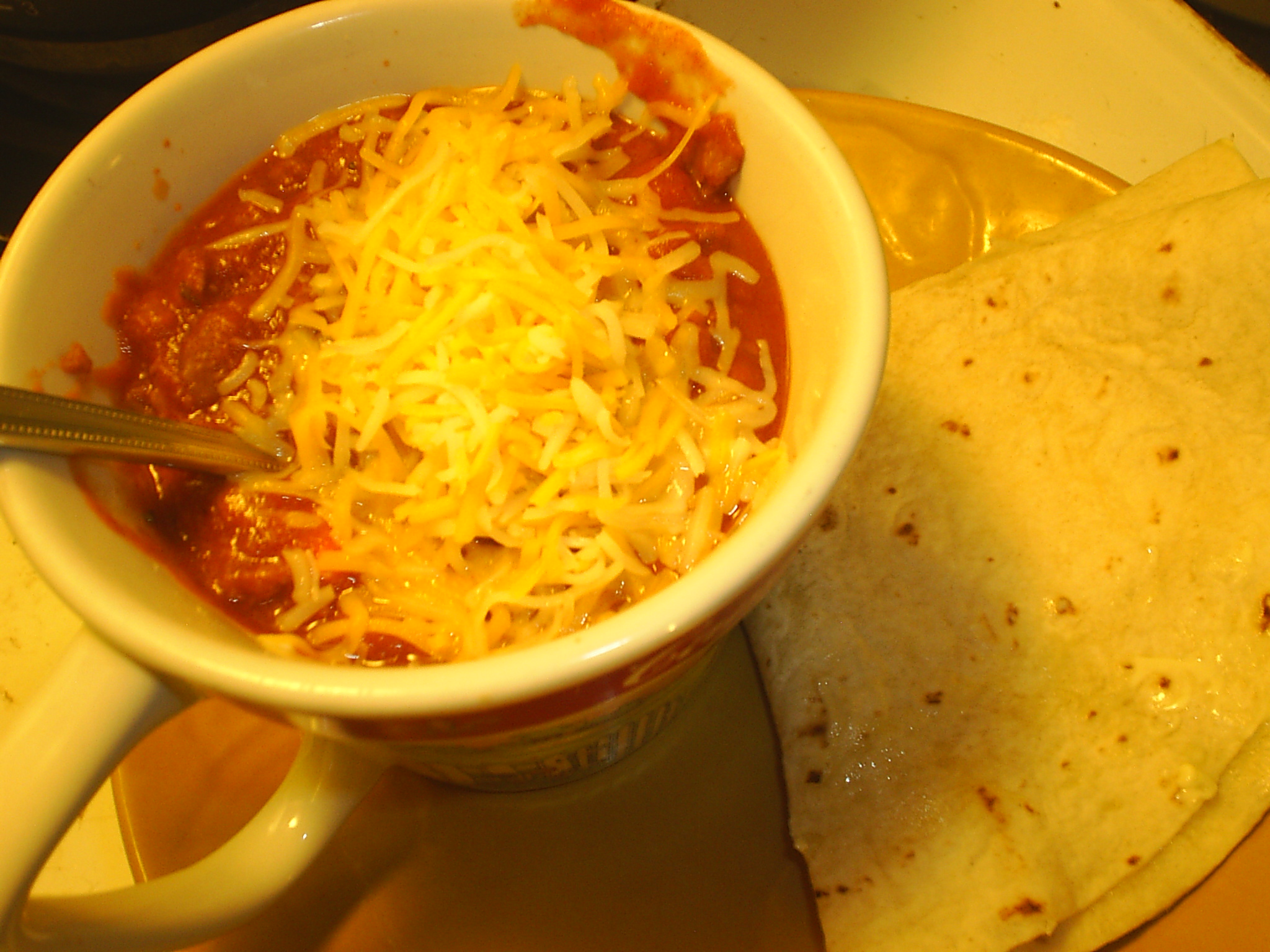
What’s for dinner?
Take a cup or two of beans from the batch you made last weekend. Brown a pound or so of hamburger with a chopped onion or you can just sauté an onion and cut up a bunch of leftover meatloaf, beef, pork roast, chicken or turkey. Add to a pot with the beans, add 1/2 bottle of beer and 1 6 oz can of tomato paste. Mix well. Add salt, pepper, paprika, basil, garlic, oregano and chili powder to taste. And maybe some Worcestershire sauce. Garnish with cheese, cilantro, salsa, guacamole or chopped onions and serve with crackers, corn chips, tortilla chips, tortillas or cornbread. Yum!
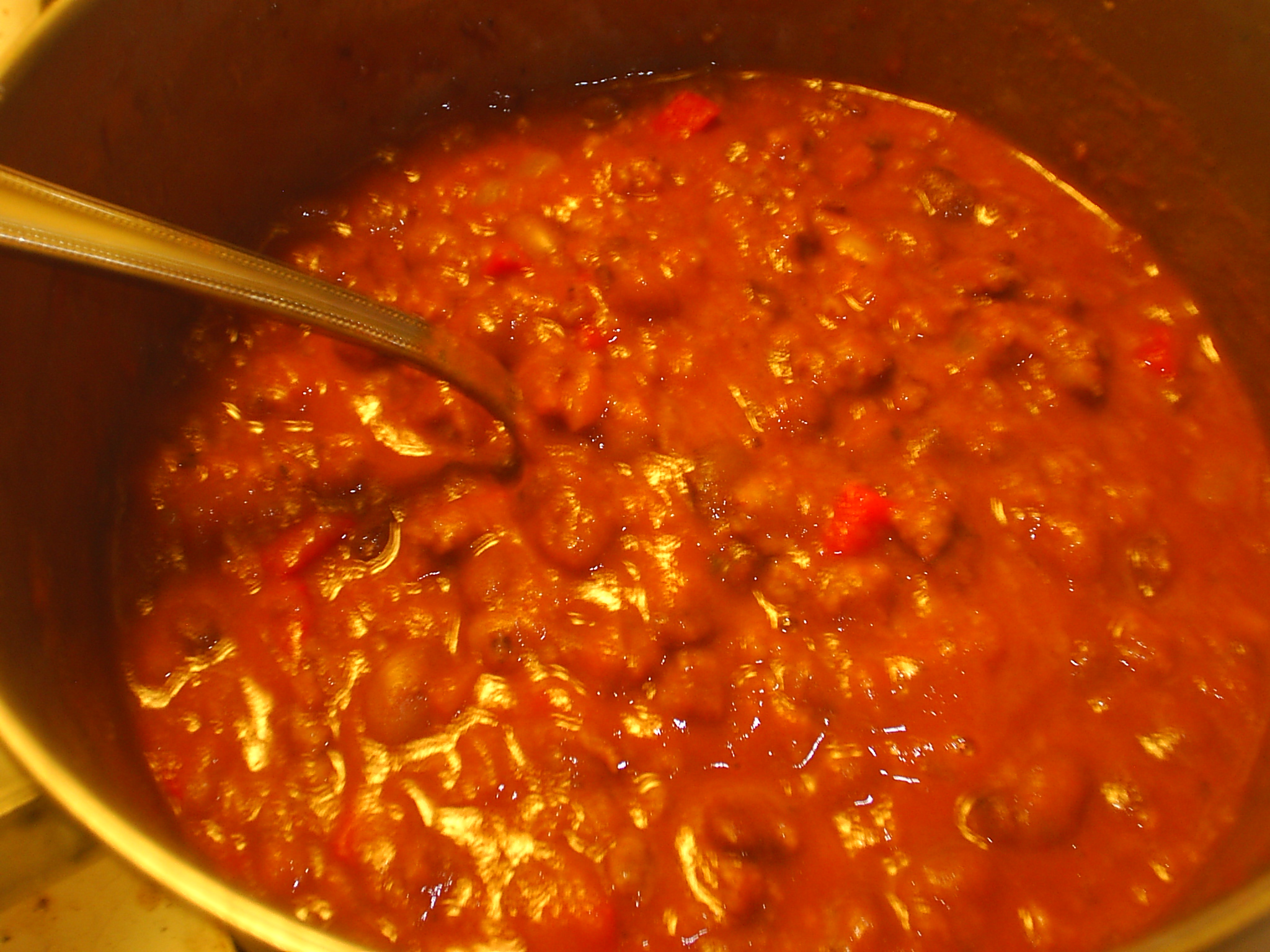
Chile
Beans
Once upon a time, when we were younger, our families used to drive down to Puerto Penasco (Rocky Point) and camp out on the dunes. We’d swim, build sand castles, explore, buy fire crackers and such with our saved allowances and have bottle rocket wars on the beach. Whitey would make a BIG pot o’ beans that we’d all eat all weekend. Grand memories! Every once in a while Dad would make a pot of beans and we’d have them for brunch or lunch over buttered bread. Sometimes the simple, quiet memories are the best.

Soak
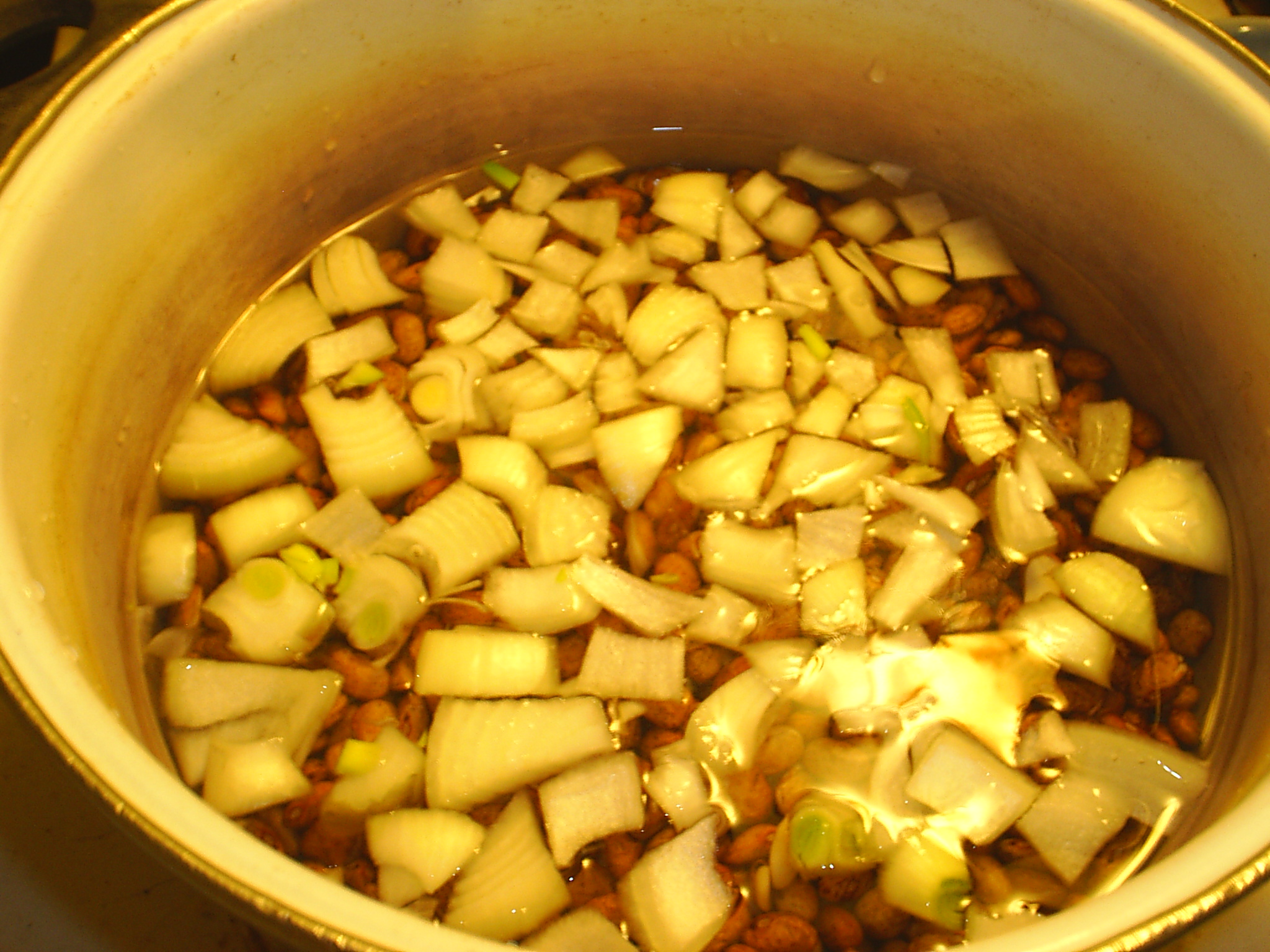
Rinse a pound of beans well and soak overnight (or at least 4 hours) in enough water to cover them by an inch or two, giving them enough room to expand. What kind of beans? Whatever you have. Kidney beans, navy beans, black beans, great northern beans…I generally use pinto beans because that’s what I grew up with.
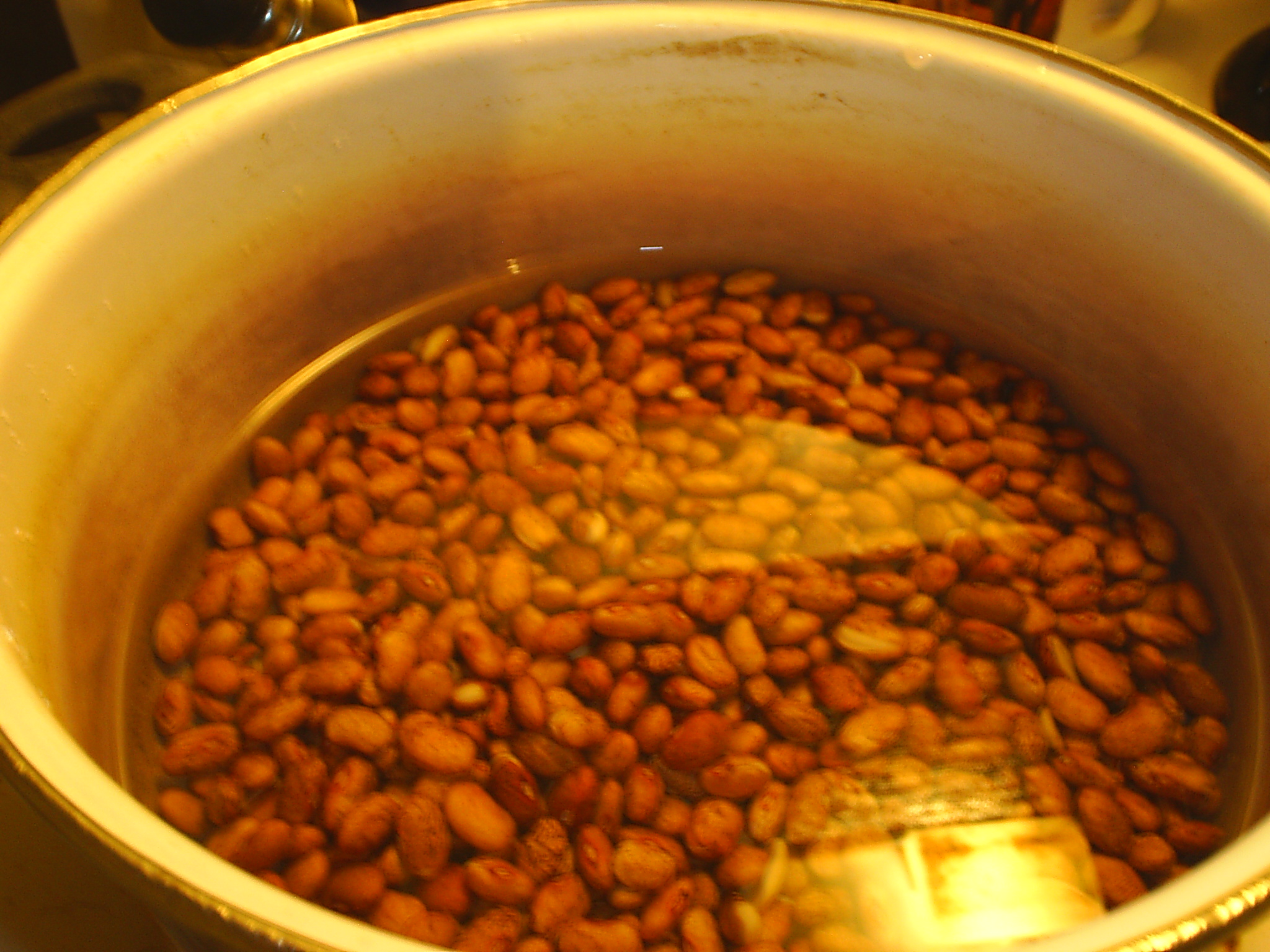
Rinse
In the morning rinse them well again,
Season
add a chopped onion, pepper and some bacon or leftover ham (or the whole ham bone) and simmer (don’t boil) them for 2 or 3 hours until they’re tender. Add a bit of epazote if you can get some to help prevent gassienss. OK, you can leave the pork out if you’re vegetarian. Don’t add salt until they’re done. Adding salt during the initial cooking makes them tough. If you’re working with only one hand and can’t chop an onion, either use pre-chopped from the store (if you happen to have any) or just toss in some onion powder or flakes.
Don’t forget to occasionally skim off (with a spoon) the bubbly scum that forms on the top. It isn’t bad, it won’t hurt you, it’s just not wonderful.

Done
Fresh beans may cook faster and be more tender. When they’re done butter a biscuit or piece of bread (fresh out of the oven is best) and cover with several spoonfuls of beans. Salt and pepper to taste. Enjoy a fantastic peasant lunch, beer optional. What to do with the rest of the beans? Stay tuned for more posts!
Once again, this is about making your kitchen life easier with leftovers. From one big pot o’ beans you can have a nice lunch (or breakfast or dinner) of beans on toast, then use some to make baked beans to accompany a Bar B Que diner (or lunch or picnic), use another portion to make chili (OK, some argue that it’s not proper to make it with beans, others insist that it must have beans. I’ll leave y’all to argue that in your spare time), then use another portion to make refried beans for another fabulous dinner. Yes, there are many more things you can do with leftover beans. Rice and beans, bean salad, bean dip (if you have any left over from the Mexican dinner), soups, stews (refried helps thickening the broth but whole beans are good, too), over ‘loaded’ baked potatoes or anything else you happen to think they might make a yummy addition to. Yes, I know, don’t end a sentence with a preposition…hey, if you read this far you get a silver star for sticking with me (and if that sentence bugged you you get a gold star for being teacher’s pet in English class). what, the run-on sentence with parentheses didn’t make you twitch to begin with?
OK, preview for other posts on what to do with leftover beans: Chili, baked beans, cassoulet or other casserole, refried beans, soup (like minestrone), rice and beans, bean dip, bean salad (3, 5, whatever number of beans you have) and I’m sure you can Google leftover beans and come up with all sorts of lovely things to make.
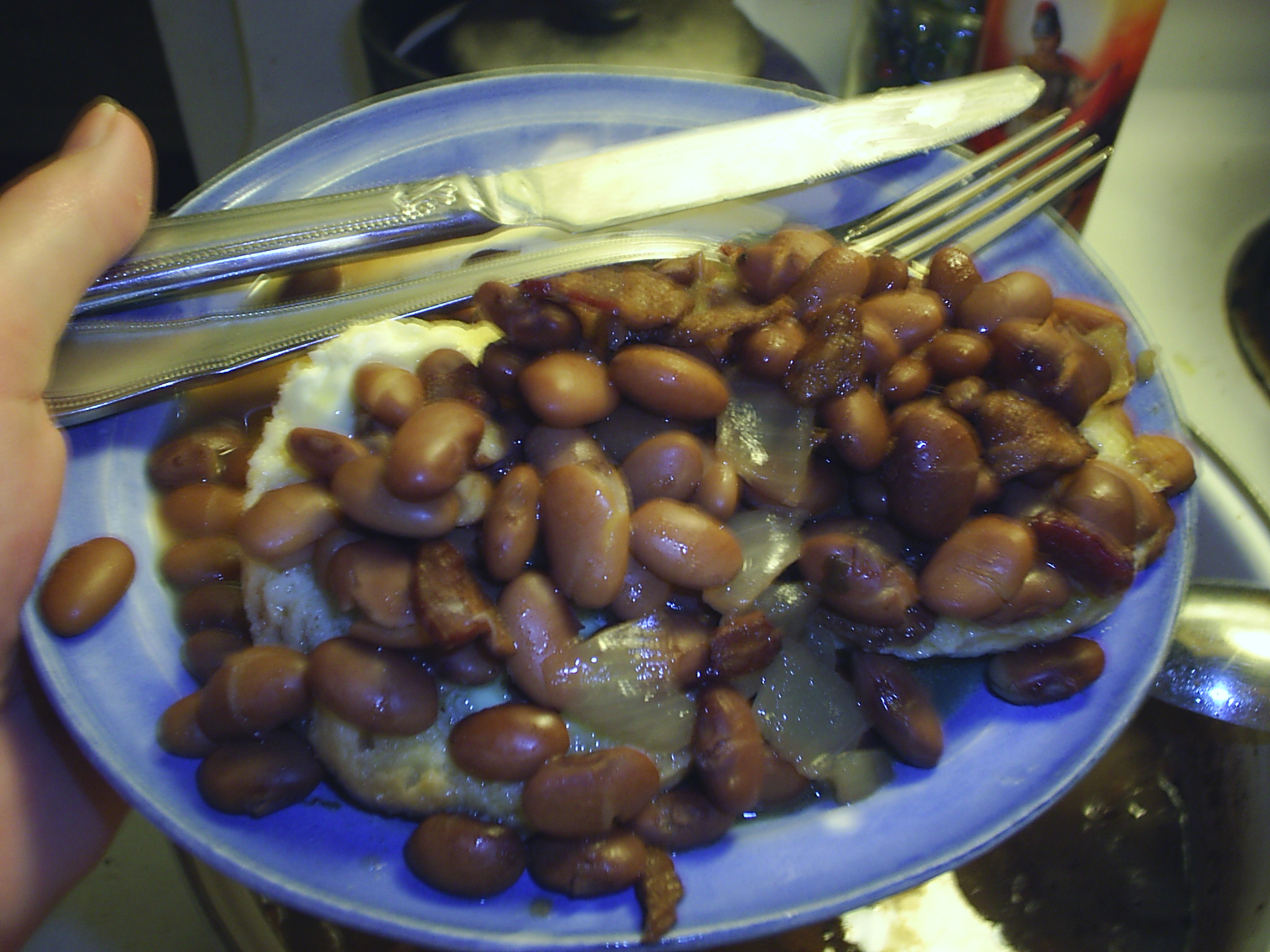
Yum!
Oops, I Just Wrote A Blog Post On Gardening!
Sorry Carla! I got done typing and realized that my Facebook comment to your post was a bit longer than I had intended, so I copied and filled it out. Thanks for the push! So many people look at our gardens and say they really couldn’t do that or have no time, they lack patience… Usually the difference between being hopeless at growing things and a gardening guru is finding the right plant for the right spot and matching the plants to your garden personality.

Sean in a garden pea tee-pee eating a carrot thinned from the edging.
Herbs are a great thing to start with because they’re basically weeds, just give them a nice place to live and they’ll pretty much take care of themselves with benign neglect till you find your rhythm. As you get used to growing things that you can use for something other than looking at start tucking in the odd veggie or two. It’s really fun when you work it into the landscaping and is a delightful surprise when people ask “what’s that?” and you prove it really is a carrot holding up the lovely, ferny foliage. Try putting asparagus as a feathery backdrop for a flower bed or artichokes in those awkward back corners.

Alyssum and Nasturtium upstaging strawberries and thyme.
I’ve had a lot of success edging beds with alyssum trailing over the edges of the beds, a row of carrots close behind and onions behind that. There’s a pretty variety of basil that forms a mound that looks nice at the corners and filling the bed with flowering herbs and pretty veggies like peas (they make nice tepees in cool months) makes for nice edible landscaping. Lettuce and cabbage come in green and red varieties and make fun alternating coloured edgings, too, giving the garden border a striped effect. Thyme and other low-growing herbs like mint, chamomile and yarrow can grow between stepping-stones. Strawberries are pretty along the side of a bed behind alyssum and thyme growing with strawberries makes the berries sweeter, too. If you don’t have much time for regular gardening just putting in fruit trees, berry and rose bushes, grape vines, asparagus and other perennials can do double-duty fulfilling the usual landscaping requirements but give something back for the work you would still have to do for any other ornamental.
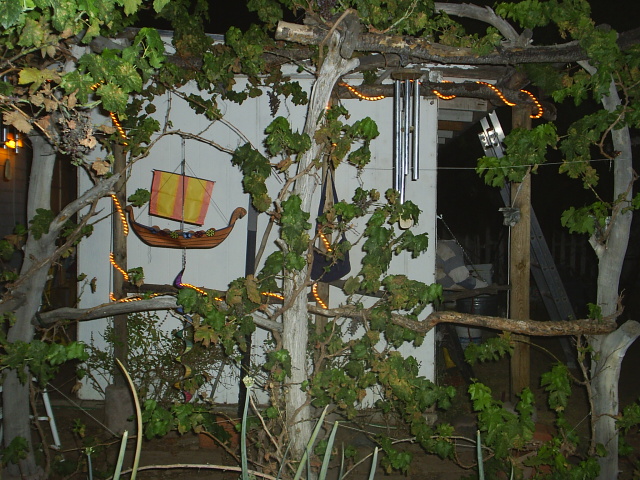
End of the arbour with rope-lights on
My grape vines not only look good and give me fruit but also cut my cooling costs in the summer by shading the southern wall of my house and let the sun warm it in the winter when the leaves drop. I love grabbing dinner from just outside the doorstep. You’d be astounded at what desert-adapted plants are useful as well as decorative. I hope to get a harvest from my prickly pear cactus this year and make some of the best jam on the planet. This year the chickens have beat me to most of the stuff, though! Aargh! A whole season of chicken escapes! Good luck on your gardens, I love hearing about other people’s experiences!

Critters in paradise
Posted in From the ground up | Tags: Do It Yourself, food, Gardening, Herbs, Landscaping, photos, post a day 2011, Self Sufficiancy, Survival, the simple life
 Brielle's Avalon
You must be logged in to post a comment.